The tone this year felt different — less about proving the case for sustainable finance, and more about defending its integrity amid geopolitical tension, regulatory fatigue, and shifting capital priorities.Sustainable finance is no longer a movement — it’s an infrastructure project for the global economy.
Geneva once again proved that sustainable finance is more than a conversation—it’s a construction site. At the sixth edition of Building Bridges, the mood was clear: determined, collaborative, and focused on action.
Over four days, global leaders from finance, policy, and development converged to address a simple question: How do we turn ambition into investable impact—fast enough to matter?
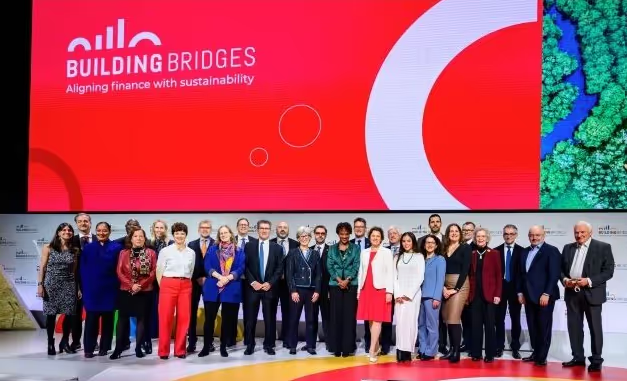
Over 2000 participants found their ways to Geneva this year (Building Bridges)
1) Capital follows clarity. When disclosures become decision-useful and standards align, money flows to impact. Across sessions—from the CFA Society Switzerland’s Private Markets for Public Good to MDB reform panels—the message was consistent: align incentives, simplify frameworks, scale capital.
2) From morality to investability. The narrative has matured. Sustainable finance is no longer “a good thing to do”—it’s a business case. Impact attribution, measurable KPIs, and performance discipline now determine credibility.
3) Decentering the US—while momentum builds elsewhere. Despite policy uncertainty, the global transition is accelerating. China’s quiet efficiency, Europe’s market infrastructure, and emerging markets’ demographics define the next growth curve. Portfolios that remain overexposed to the US risk missing the transition dividend.
4) EMDEs: from perceived risk to priced risk. Country risk—especially in Africa—is often exaggerated. The next frontier for sustainable returns lies in bridging local origination with global capital via blended finance and tailored liquidity design.
5) Incentives, incentives, incentives. Scaling impact depends on smart incentive structures: from concessional capital and policy signals to client mandates that reward outcomes, not only intentions.
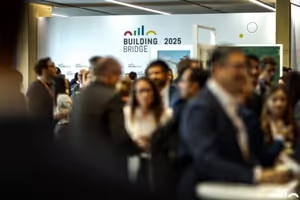
Sustainable Finance Geneva
Beyond the plenaries, some of the sharpest insights came not from the stage, but from the corridors, coffee tables, and side sessions — where candid reflections met real-world pragmatism:
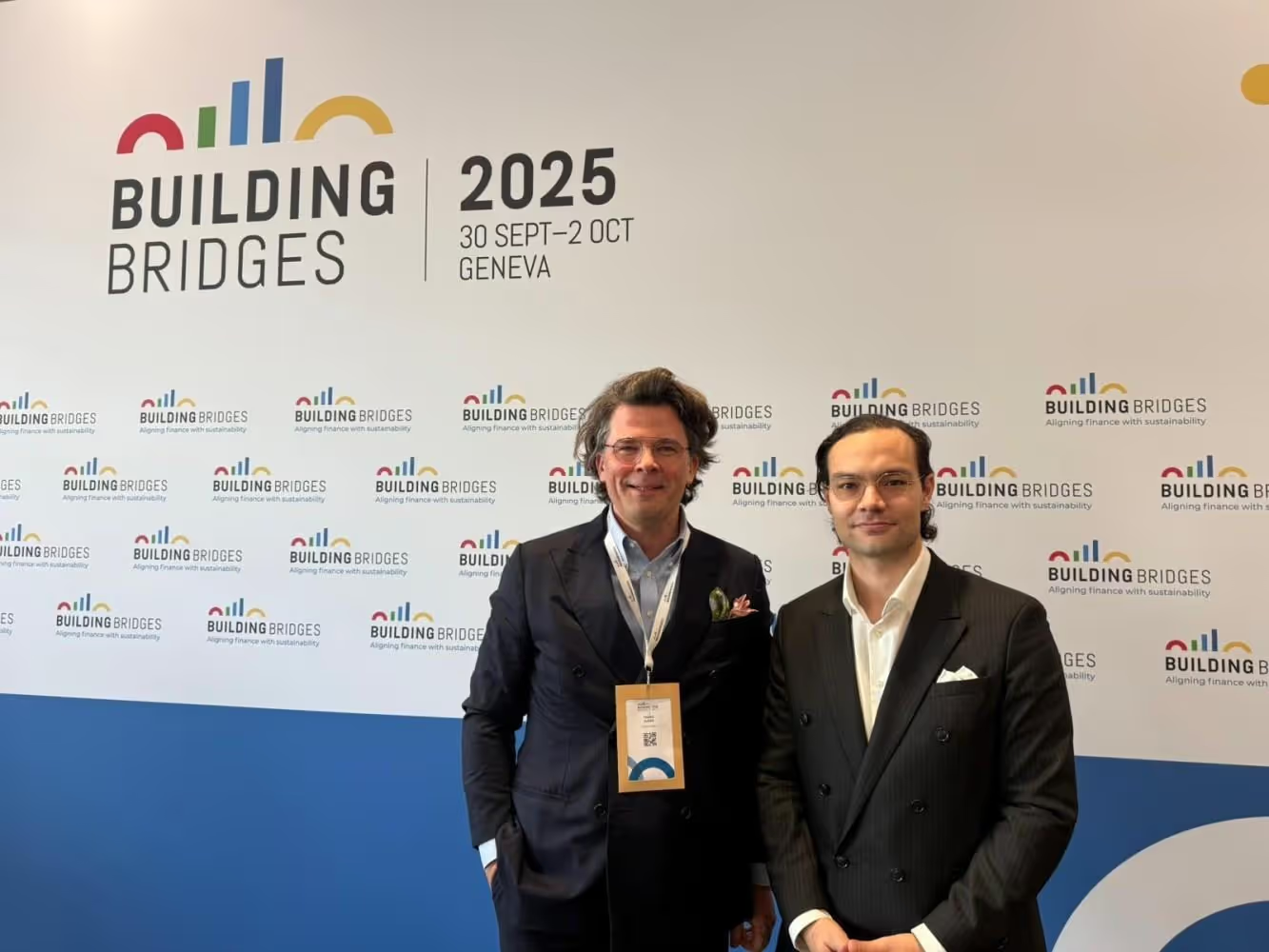
Beyond the plenaries and panels, what made Building Bridges 2025 remarkable was the human connection—meeting and exchanging with inspiring leaders who shape sustainable finance every day.
Speaking and meeting with personalities like Dr. Tadas Zukas, Rosa Sangiorgio , Sabine Döbeli, Patrick Odier, Michael Diaz, Marion Ehringhaus, Juliana Barbosa, LL.M., Romain Leroy-Castillo, Claire Mizutani, PMP®, Dimitri Senik, CFA and many others, was not only a privilege but a genuine reminder of the strength and integrity within this global community.
Each conversation reflected the same conviction: the sustainable transition is not a niche—it’s the next operating system of finance. And seeing this commitment across initiatives like CFA Society Switzerland and, Cambridge Institute for Sustainability Leadership (CISL) , Swiss Sustainable Finance, SFG - Sustainable Finance Geneva, and SDG Impact Finance Initiative (SIFI), Swiss Platform for Impact Investing (SPII) makes the direction unmistakable: purpose, performance, and partnership now align.
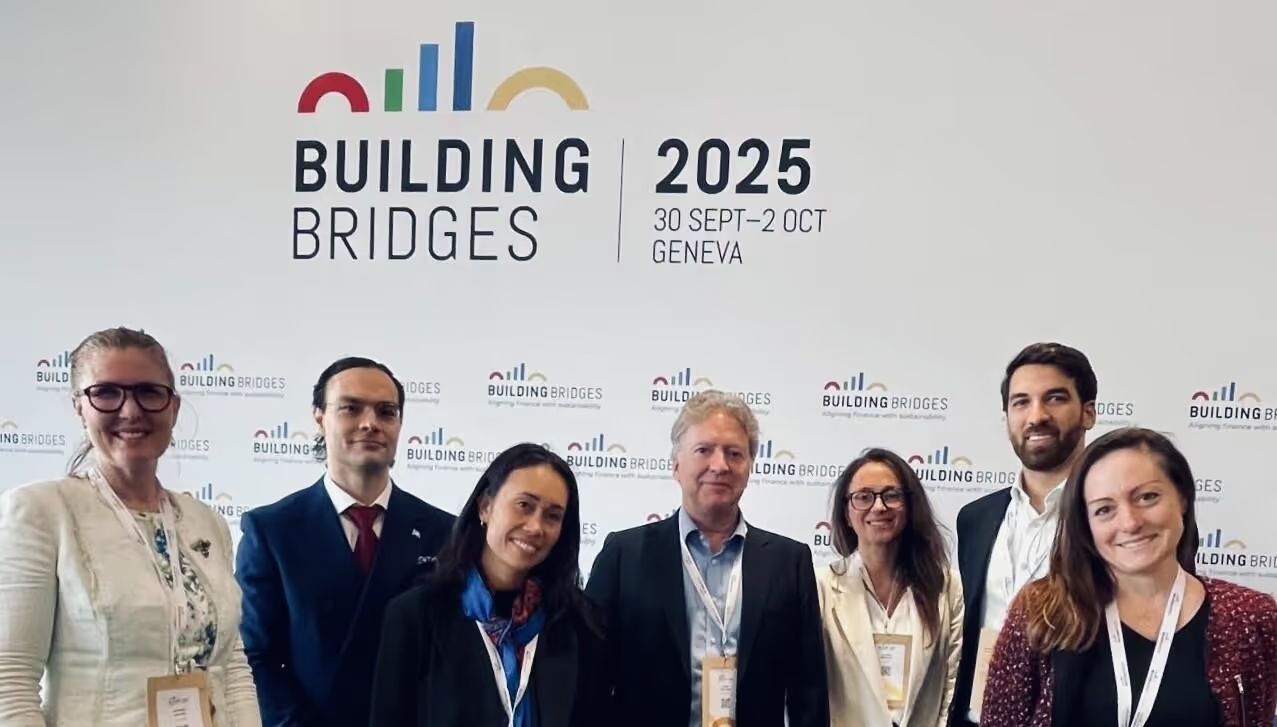
CISL Members & City and Thematic Anchors
The conversations in Geneva made one thing clear: sustainable finance has matured from vision to execution.What happens next depends less on declarations and more on disciplined follow-through — turning dialogue into deliverables.
For professionals across finance, policy, and sustainability, the message from Geneva is clear: the bridges are built — now it’s time to cross them.
Building Bridges 2025 proved that Switzerland remains a bridge-builder—between sectors, systems, and worldviews. The conversations this year were more mature, the tone more urgent, and the commitment more practical.
This was not a conference about what should be done. It was a statement about what’s already being built.
What are your thoughts on this years 6th edition? Comment below!
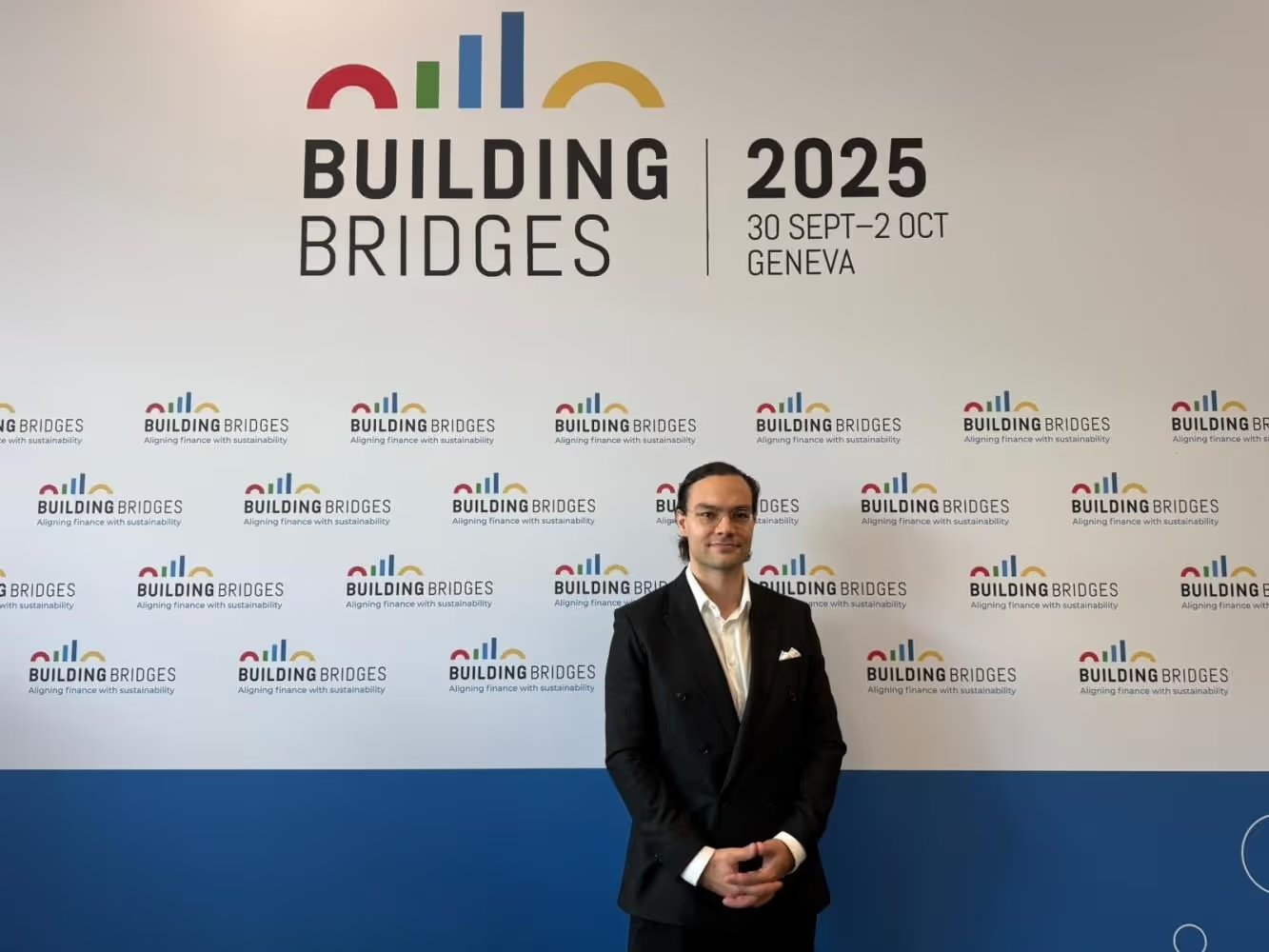
“Looking ahead, no matter the current storm, the direction is clear, the future bright. Together we’ll enable a sustainable future.”
See you 2026


.avif)
.avif)