Imagine walking into a lunch seminar expecting an update on regulatory mechanics — and instead witnessing a masterclass in geopolitical clarity, legal nuance, and the future architecture of sustainable finance. That was the experience at yesterday’s event hosted by the Competence Center of Sustainability at the University of Zurich: Swiss Sustainable Finance Regulation – At a Crossroads?
What unfolded was not just an academic panel and peak debate. It was a reality check...
Prof. Kern Alexander set the tone from the first minute. You could immediately sense the depth of his expertise — the rare blend of legal precision and global perspective that turns a seminar into an intellectual compass. He mapped the shifting terrain with disarming clarity: While sustainable finance is losing momentum at the US federal level, it continues to advance across states such as California, New York, and New Jersey, where boards are still required to disclose sustainability risks and demonstrate what action they are taking.
His message was subtle but powerful: Even in a world of political backlash, progress persists — just not always where we expect it.
“If you’re doing business in the US,” he noted, “the regulatory risk is no longer national — it’s geographical.
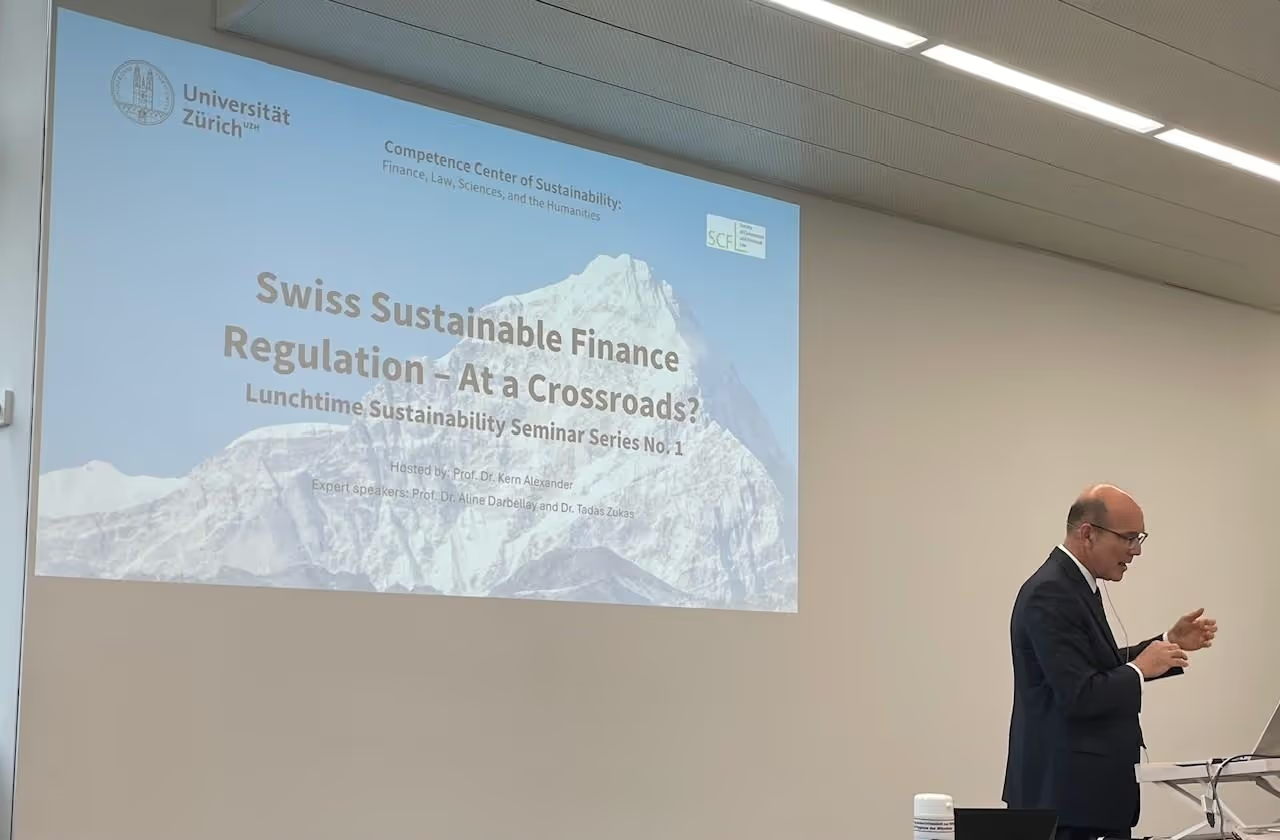
Prof. Alexander dirigating Swiss, European and US Regulations.
Professor Aline Darbellay brought the discussion home to Switzerland. Her question sliced through the noise:
Is it really FINMA’s role to impose additional sustainability requirements — when financial institutions already face extensive fiduciary, legal and risk-management duties?
She explained that FINMA cannot manufacture new risk categories without a solid legal basis. Sustainability risks may be emerging, but regulation must remain principled, not political. Switzerland’s approach, she suggested, has always leaned toward precision over speed.
Her intervention revealed the core tension: Switzerland does not oppose sustainable finance — it resists premature regulation.
Dr. Tadas Zukas opened with a ritual: He always scans the NZZ front page for sustainability-related headlines before giving a talk.
Yesterday’s headline did not disappoint. It introduced ESG another way — the idea that the second “S” stands for Security, and in some circles, even a second “G”: Geopolitics.
Personally I would even go a step further and calim that there's a second E in ESG, that gets overlooked often - Economics! A reminder: Sustainable Finance is not philanthropy. It’s risk, resilience, and return. It’s also about business. Let's keep that in mind.
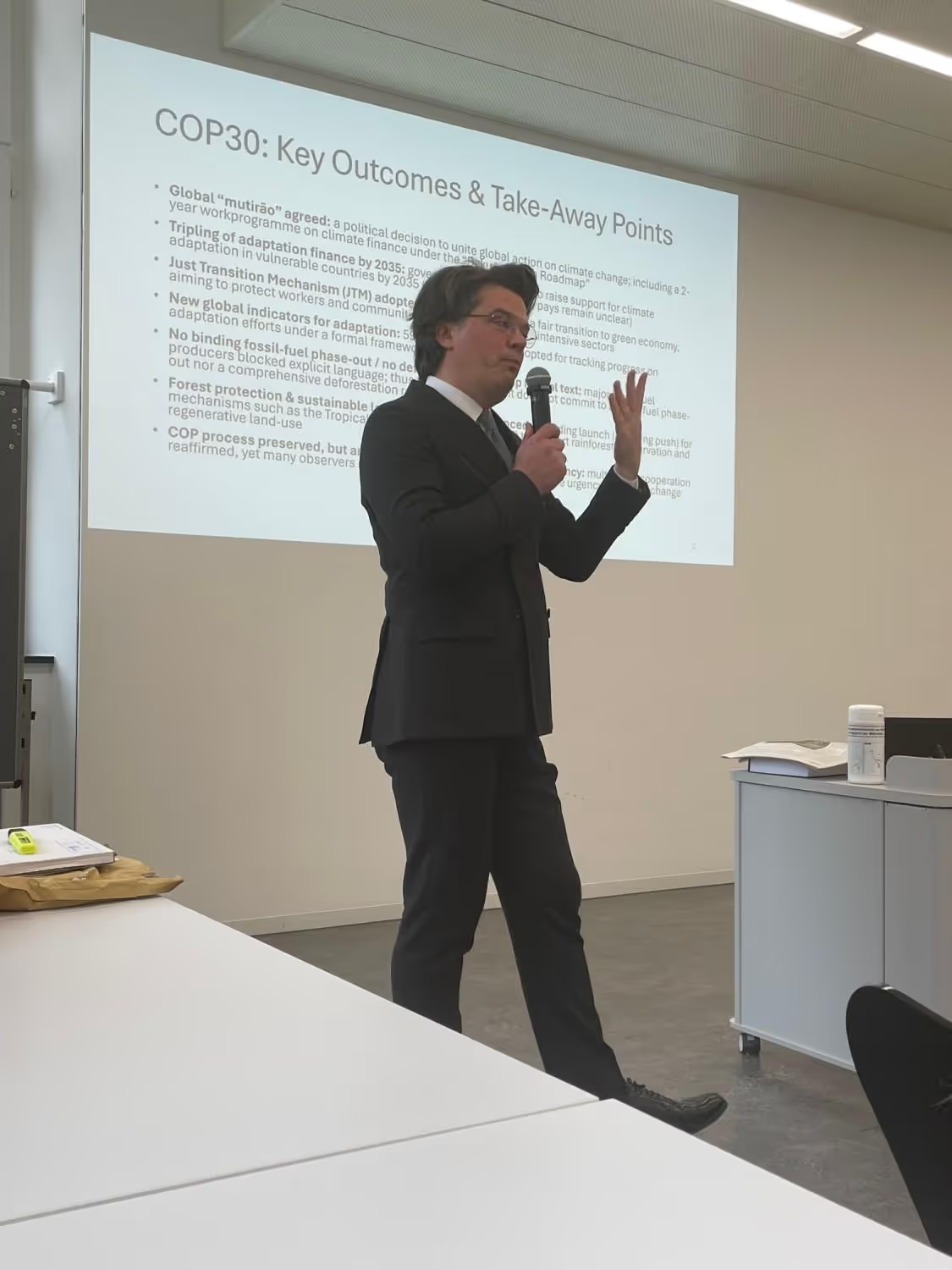
Dr. Tadas Zukas
Zukas contrasted the two dominant approaches to sustainable finance regulation:
1. The Swiss Approach
2. The EU Approach
The EU’s CSRD, he reminded the audience, was never meant to punish companies — it was a “fitness check” of the NFRD. The intent was scale, clarity, comparability. Now, through the Omnibus rollbacks, parts of this ambition are being undone.
The paradox? Everyone waited for the CSRD data — and just when the data moment arrived, the framework was cut back.
One of his sharpest points: Sustainable finance existed long before EU regulation.
GRI. Transparency frameworks. Corporate responsibility disclosures. Investor stewardship.
“Many people misunderstood the SFDR,” he said. “They treated Articles 6, 8 and 9 as labels — instead of looking at Article 7 and the definition of sustainable investment.”
He is right. We have been arguing about labels, while the real discussion is transition, materiality, and risk.
Zukas was blunt: “We no longer need to debate what a sustainable investment is. We need to understand what the transition requires.”
This is the shift that matters. And the industry feels it.
Climate-risk integration, ESG risk management, and sustainability disclosures are no longer fringe topics — they are mainstream, albeit contested.
The audience came alive. Sharp questions. Contradictions. Serious concerns.
A professor reminded the room: “You regulate when you believe the market will not do something on its own.”
Another participant argued that Switzerland’s soft approach risks disadvantaging firms that want to lead — those aiming to be climate champions.
And finally, Zukas delivered the line that summed up the entire afternoon:
“It is dangerous when finance becomes politicized — from both sides. We must protect sustainability from ideological capture, left and right.”
Few sentences capture the moment better.
Sustainable finance is not collapsing. It is recalibrating.
Between EU ambition and Swiss restraint, US fragmentation and global geopolitical tension, regulation stands at a crossroads — but the direction is not random. It is shaped by risk, economics, governance, law, and political psychology.
The seminar revealed a truth we often forget:
Sustainability is no longer about virtue. It is about systems. And systems require clarity, credibility and coherence — not just rules.
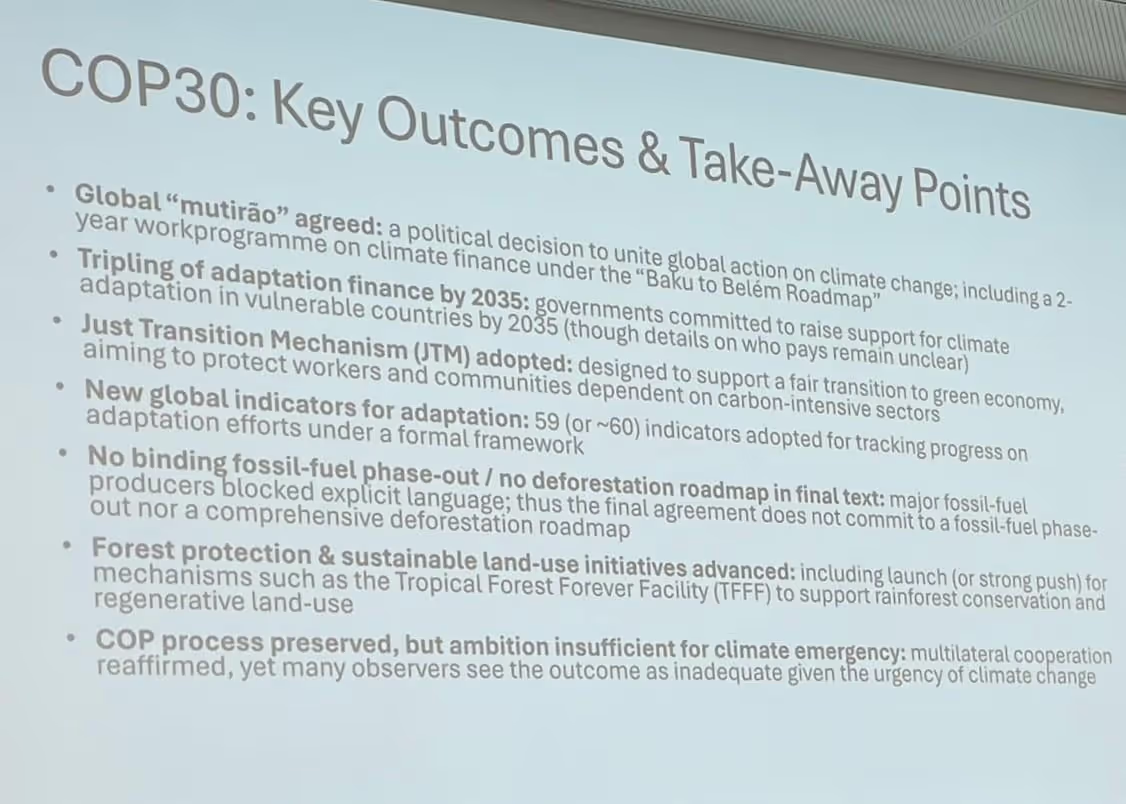
What impressed me most was not the regulatory detail, but the intellectual honesty of the speakers.
No slogans. No ideology. No easy answers.
Just the reality of what it takes to steer a financial system through climate risk, political pressure and a rapidly shifting global order.
If sustainable finance has a future — and I believe it does — it will be built by minds like these.
What do you think, are we on the right path with the current Swiss self-regulation? Comment below!
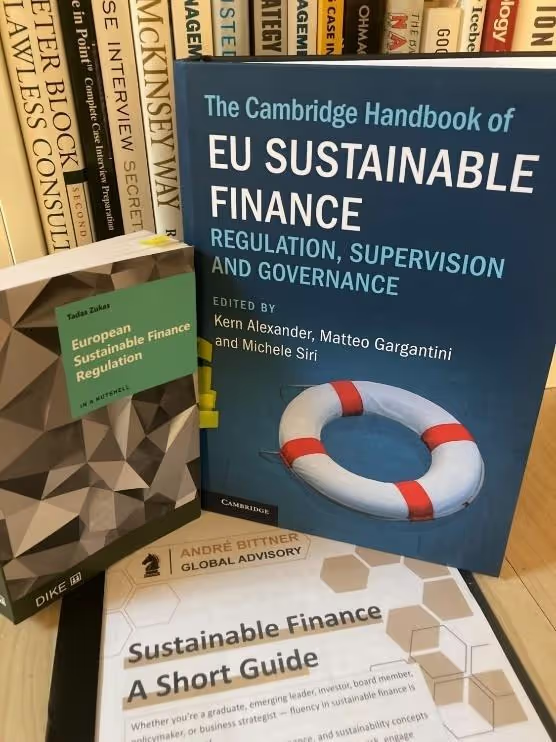
For those who want to look deeper, the works below offer the intellectual architecture behind today’s sustainable finance debate — from EU law, to Swiss practice, to a pragmatic guide for navigating transition finance.
Highly recommending Prof. Alexander's Book on EU Sustainable Finance and Dr. Zukas Book on EU Sustainable Finance regulation. And for starters my simplified Short Guide on SF.


.avif)
.avif)