Two weeks, two worlds — and one shared lesson: Progress in sustainability isn’t only decided in boardrooms or summits. It’s negotiated.
After an intense week at Building Bridges 2025 in Geneva — where finance, policy, and purpose collided — I travelled east to St. Gallen to join the HSG Executive School’s Negotiation Programme. What awaited us there felt like a living laboratory for everything we had just discussed in Geneva: governance, incentives, and the human factor of systemic change.
The highlight for me was the #Climate Club Simulation, developed in partnership with United Nations Institute for Training and Research (UNITAR) and inspired by Nobel laureate William Nordhaus’ model. Six countries, six agendas — one mission: align on CO₂ pricing, R&D targets, tariffs, and sanctions. The setup was #brutally realistic: national interests, asymmetrical power, and competing definitions of “fairness.”
My assigned role? Coal Country. Imagine! For those who know my background in sustainable finance and positive impact, you can imagine the irony... But this was exactly the point — to step into another perspective, to understand resistance not as ignorance but as self-preservation, and to see how transformation really happens: through negotiation, not declaration.
A perfect deal rarely exists — but a workable one can still change the world.
The exercise revealed the central challenge of climate diplomacy: how to make collective action economically rational. Discussions on CBAM (Carbon Border Adjustment Mechanisms), CO₂ pricing, and sanction design felt less like theory and more like a prelude to what’s ahead at COP30 in Brazil.
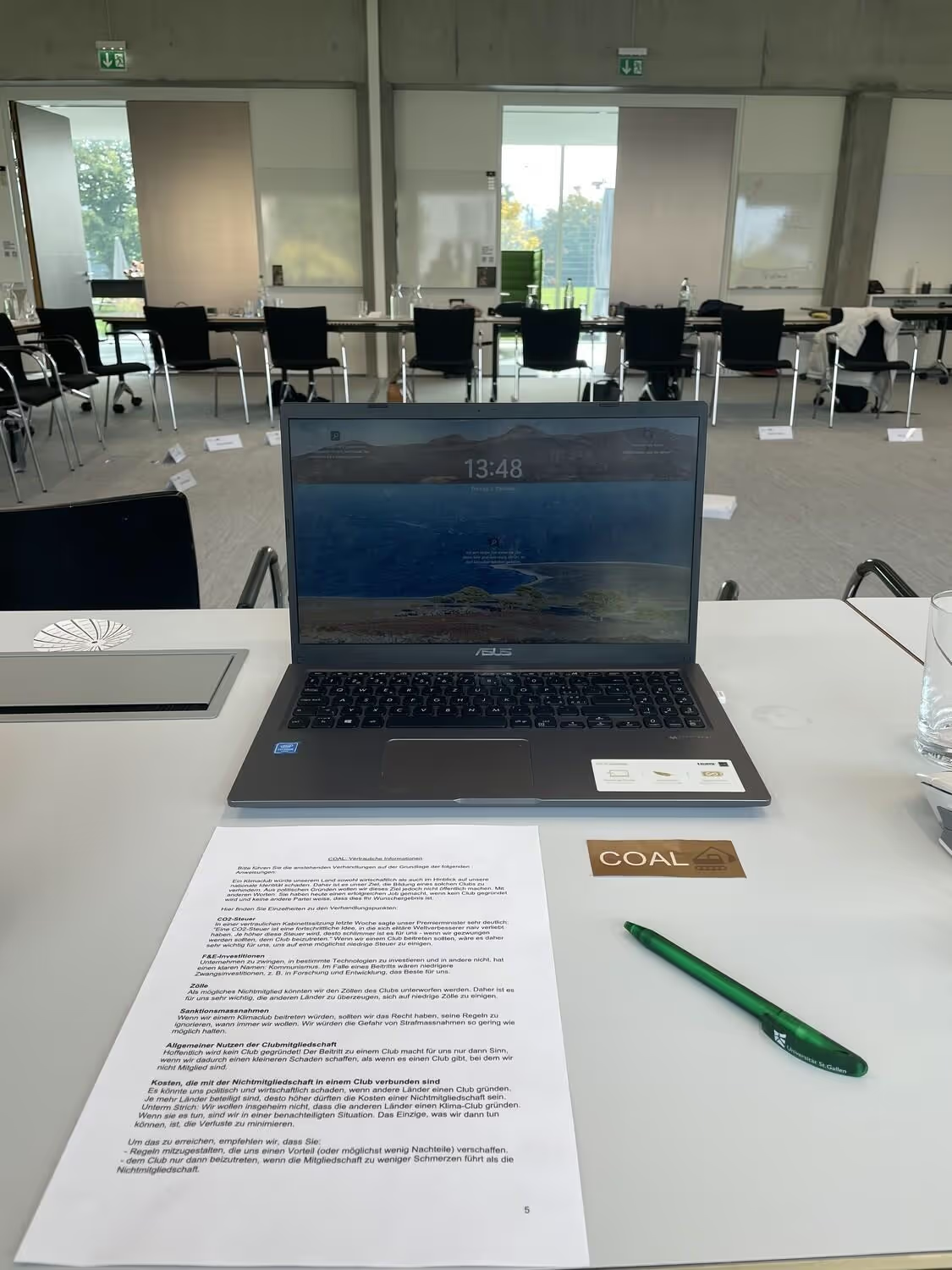
Reviewing my "confidential documents" for the Coal Colaition. I briefly considered calling Mr. Trump for advice - then remembered it's a negoatiation, not a reality show.
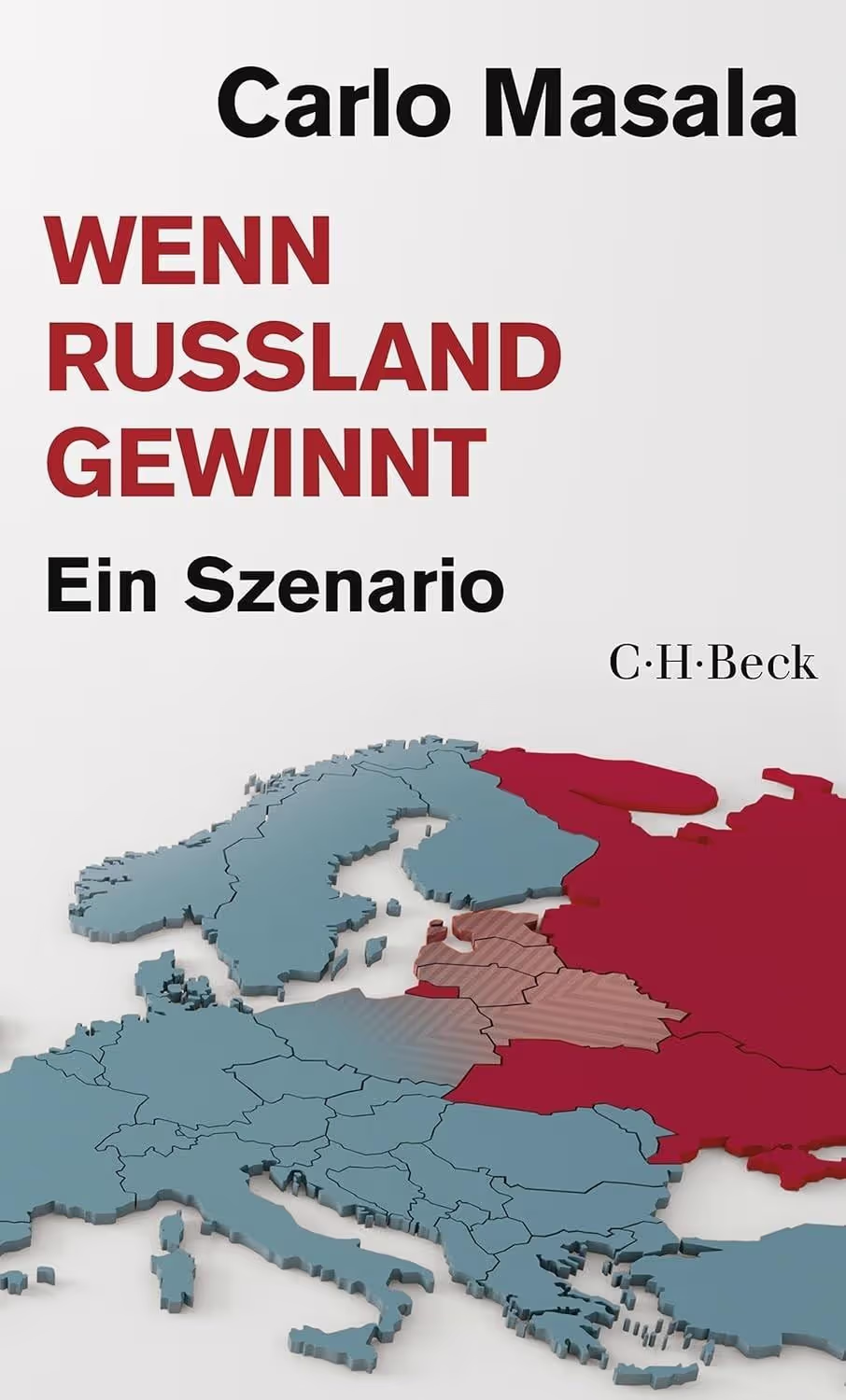
Beyond the Climate Club simulation, several high-level programmes ran in parallel at the HSG Executive School — including the St.Gallen Board Certificate from the Swiss Board School (#Governance). This overlap created a unique environment for exchange: policy-makers, executives, and sustainability professionals sharing insights across disciplines. In between sessions, conversations often carried more depth than some panels — from global power dynamics to personal leadership philosophies. One particularly impactful moment for me was a book recommendation I received: “Wenn Russland gewinnt” by Carlo Masala, a profound analysis of power, history, and resilience — and a reminder that governance and geopolitics remain inseparable from sustainable progress.
Beyond climate policy, the programme at HSG provided a deep dive into negotiation frameworks like the #Harvard Model, #FBI Team Dynamics, and Competitive vs. Collaborative Styles. It wasn’t just about tactics — it was about self-awareness, framing, and leverage.
Key takeaways for me:
These lessons felt deeply connected to Building Bridges — both literally and metaphorically. In Geneva, we (incl. John Kerry) spoke about systems change. In St. Gallen, we applied - practiced how to make systems move.
Standing between Geneva and St. Gallen, between global vision and Swiss precision, I realized how complementary these arenas truly are. Sustainability is diplomacy; diplomacy is leadership; and leadership starts with understanding incentives.
This combination of Building Bridges and HSG reaffirmed my belief that sustainable transformation demands more than capital — it needs dialogue, courage, and cross-sectoral intelligence.
We can’t decarbonize in silos. We negotiate our way into a sustainable future.
For me, this experience was more than academic — it was personal. Representing “Coal Country” as someone devoted to sustainable finance was a lesson in perspective, humility, and systems thinking. It reminded me that impact requires not just conviction, but competence — and that progress happens when we listen as strategically as we lead.
I’m deeply grateful to the HSG Executive School, my fellow participants, and the faculty for this transformative experience — and to everyone who continues to build bridges, both in Geneva and beyond.
From Geneva’s global stage to St. Gallen’s negotiation tables, one truth stands out: The future isn’t declared — it’s negotiated.
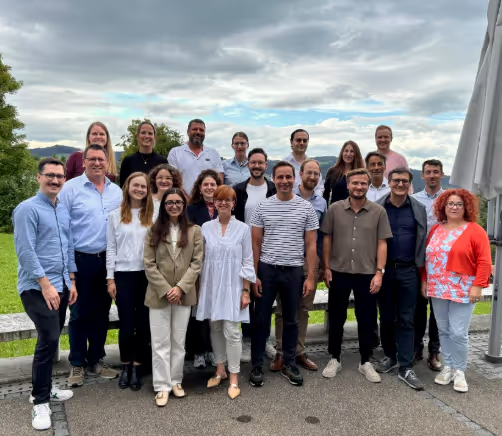
After several negoatiation - and even more coffee rounds.


.avif)
.avif)